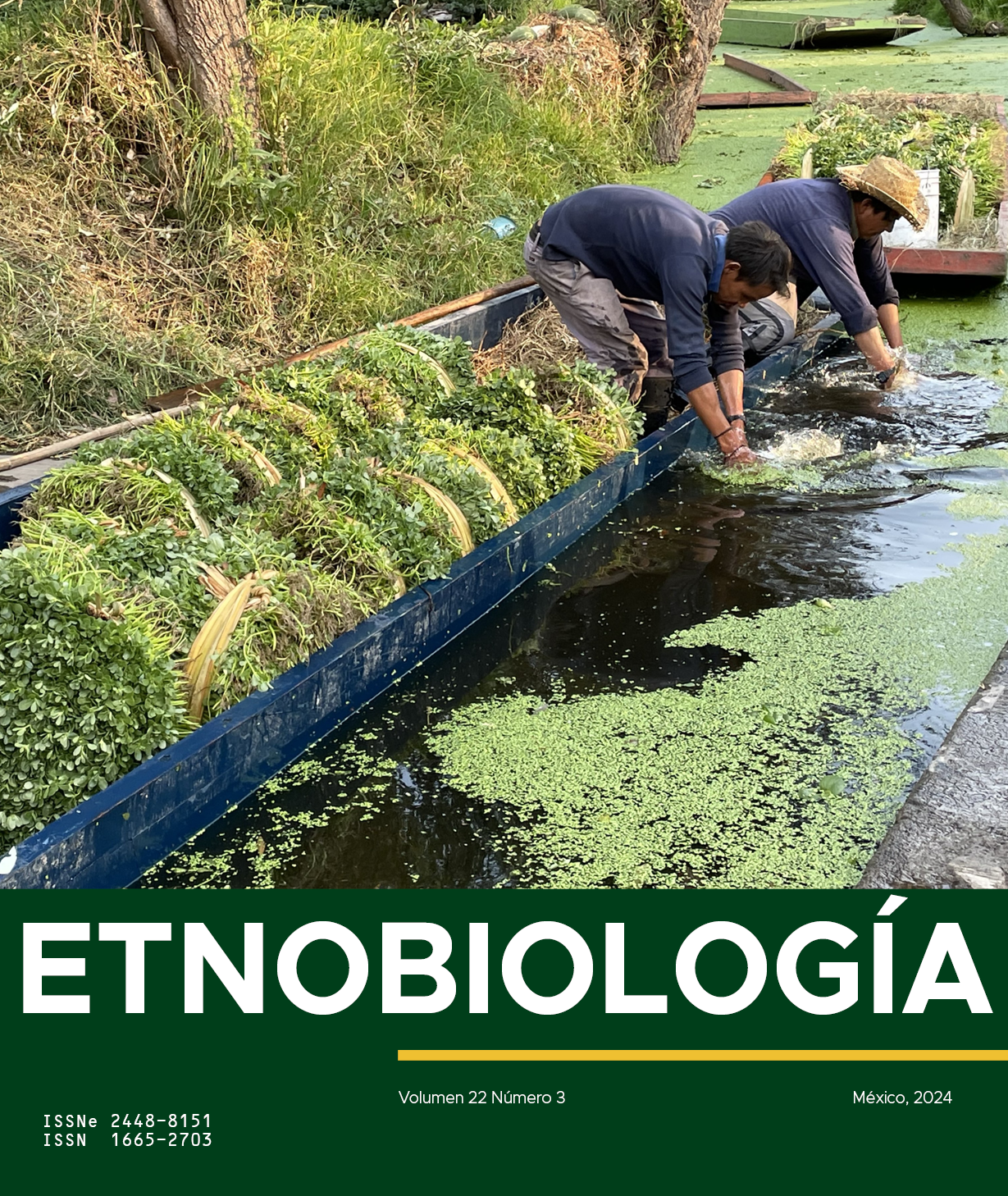
QUELITES FROM THE BASIN OF MEXICO AND ADJACENT REGIONS: THEIR DIVERSITY, GEOGRAPHICAL DISTRIBUTION, ORIGIN, FORMS OF CONSUMPTION AND PREPARATIONS
Keywords:
edible greens, forms of preparation and consumption, quilitl, use and stigmatizationAbstract
The plants known as quelite (a linguistic loan word from Nahuatl for edible leafy greens) from the Basin of Mexico and adjacent regions are summarized based on field observations from 1981 to date, collections that were conducted in markets and tiangu?is as well as bibliographic information. A total of 77 species were encountered of which 15 are exotic agroindustrial vegetables while the remaining 62 species were of local origin (native and introduced). The two-way clustering analysis of the latter group’s geographic distribution in Mexico segregated 4 groups: A) species with a wide geographic distribution throughout Mexico (22 species with various types of management); B) species with their main distribution throughout central Mexico (19 species common in central Mexico and less common in the north of the country); C) species with a geographic distribution in northern and central Mexico (14 domesticated annuals that tend to have a northern range); and D) species with a limited and dispersed geographic distribution in Mexico (7 species). Information on the provenance as well as the main forms of consumption and preparations of each species are included. The most important form of consumption of quelites was cooked (53 species), followed by raw (22 species) and raw and cooked (13 species). Of the various ways of preparation (steamed, in broth, in beans, tamales, tacos, quesadillas, other stews and salads), the most common is “steamed” (27 species).